Call For A Friendly Chat On:
01865 391187

Author name: Georgiana Ciobotaru

Elderly man with live-in carer

What is Parkinson’s disease and how can I care for someone with the condition?

What is Parkinson’s disease? Parkinson’s disease is a progressive neurological condition. This means that it causes problems in the brain and gets worse over time. The condition develops when cells in the brain stop working properly and are lost over time. These brain cells produce a chemical called dopamine. Symptoms start to appear when the brain cannot make enough dopamine to control movement properly. What are the symptoms of Parkinson’s disease? There are three main symptoms of Parkinson’s disease: Other symptoms include difficulty turning over in bed, fatigue, reduced sense of smell, depression, anxiety, tiredness, disturbed sleep, constipation, and a tendency to have small handwriting. How is Parkinson’s disease diagnosed? If you suspect you may have Parkinson’s disease, you should make an appointment to see your GP. Your GP will refer you to a specialist if they think you may have the condition. You may want to keep a diary to help you explain your symptoms to the specialist. It may also be a good idea to make a list of any questions you want to ask. It can be helpful to take someone with you to your appointment for support. There is no definitive test for Parkinson’s disease. Your specialist will take a detailed medical history, and they will examine you to look for common signs of the condition. This will include checking your walk, speech, face and limbs to check for symptoms. You may also be asked to write or draw. Your specialist will check that the symptoms do not have a cause other than Parkinson’s disease. What treatments can help Parkinson’s disease? If you have been diagnosed with Parkinson’s disease, you will be offered a variety of treatments to manage your symptoms. The three main treatments to help you manage your Parkinson’s disease are: Each person has a unique experience of living with Parkinson’s disease so your specialist will find the right combination of treatments for you. Medication There are a range of medications that can improve your symptoms, and your specialist will prescribe the one that is right for you. Some of these medications do have side effects, but your specialist will talk you through these. Exercise Recent research has suggested that exercise can be as important as medication in managing the symptoms of Parkinson’s disease. Increasing exercise to 2.5 hours per week can make a significant difference. Some patients may be put off trying exercise because of the physical symptoms of the condition such as slow movement, rigidity, pain, anxiety and fatigue. However, it is worth persevering as exercise can make such a big impact on wellbeing, as well as a slowing the progression of the symptoms. Exercise can also improve other issues such as poor sleep, mood problems and constipation. You may want to talk to your GP, specialist or physiotherapist to find out what kind of exercise plan would be best for you. However, ultimately the right exercise is whatever eases your symptoms and makes you feel better. Therapies As well as taking medication and exercising, there are specific therapies that can help people living with Parkinson’s disease. These include: 1.       Physiotherapy Physiotherapy can help people if they are having trouble with everyday movement such as walking or getting out of bed. Physiotherapists can also advise on what kinds of exercises can be helpful in managing the symptoms of Parkinson’s disease. 2.       Speech and Language Therapy A speech and language therapist will help you to express yourself clearly so you can be understood by those around you. Speech and language therapists can also help with the physical difficulties around eating and drinking, such as difficulty swallowing. 3.       Occupational therapy An occupational therapist can provide invaluable help with managing everyday tasks. Your occupational therapist will work with you to develop techniques and strategies to help with tasks you find difficult. He or she will also be able to advise on equipment and technologies that may be useful. Your GP or specialist will be able to refer you for the above therapies. Keeping well with Parkinson’s disease As well as the above treatments, there are general lifestyle changes that can help with Parkinson’s disease. This includes eating a healthy diet that is full of plant-based foods and high in antioxidants. It is also important to stay hydrated. In addition, you should get outside as much as possible to get some fresh air and sunshine. Being outside allows your body to make vitamin D from sunlight. How to care for someone with Parkinson’s disease If you are caring for someone with Parkinson’s disease, you may be wondering what to do to help. Of course, this depends on the person you are caring for and what stage of the disease they are at. For example, a person recently diagnosed with Parkinson’s disease may not need much practical help but might find it beneficial to talk over the implications of their diagnosis and how they are feeling. You may be able to support the person you care for by helping and encouraging them to undertake the activities that help them to manage symptoms, such as exercising and eating well. As Parkinson’s disease develops, the person you care for may begin to rely on you for practical help with everyday tasks. Mumby’s can offer support to care for your loved ones in their own home if needed. How Mumby’s Homecare Support can help? At Mumby’s, we provide outstanding live-in care for the elderly, with a particular focus on the specialist support required for conditions such as Parkinson’s disease. Our professional and friendly staff are trained in the practical support of your loved ones with these Parkinson’s disease so that they can stay in the comfort and familiarity of their own homes and neighbourhood. Our carers provide help around the home as well as personal care. They can cook nutritious meals for your loved one, encourage exercise, and offer companionship and emotional support. Our carers can also help your loved one with their personal care needs, such as toileting and bathing. If you need help supporting

What is Parkinson’s disease and how can I care for someone with the condition? Read More »

Parkinson's

Tips for Parkinson’s Care

Tips to help you with Parkinson’s care for your loved one If you are caring for someone living with Parkinson’s there can be a lot of challenges. However, it is possible to provide good Parkinson’s care for your loved one. In addition, there is plenty of support available to help you. What is Parkinson’s Parkinson’s is a progressive neurological condition that develops when cells in the brain stop working properly. These brain cells produce a chemical called dopamine. Symptoms start to appear when the brain can’t make enough dopamine to control movement properly. The three main Parkinson’s symptoms are: Other symptoms include fatigue, reduced sense of smell, depression, anxiety, tiredness, disturbed sleep and constipation. How is Parkinson’s treated? There are a range of treatments available for people living with Parkinson’s. These include medication, exercise and therapies. Each person has a unique experience of living with Parkinson’s. Your specialist will find the right combination of treatments for you or your loved one. Care will involve a arrange of health professionals including doctors, nurses, occupational therapists, physiotherapists and speech and language therapists. Good nutrition and regular, appropriate exercise can also be enormously helpful in living well with Parkinson’s. How can I provide Parkinson’s care for a loved one? Caring for someone living with Parkinson’s disease depends on their individual needs and the severity of their symptoms. However, in general, caring for someone with Parkinson’s involves assistance with: Tips to help you care for your loved one with Parkinson’s Make sure you have time to relax and that you stay healthy and well. Don’t be afraid to ask for help if you need it. Enlist the help of other family members or a professional carer to assist you in providing care. Get to know what causes its symptoms, how the condition progresses and the treatments that can help manage it? Go along to their medical appointments and ask any questions you have. Do your research. For example, sites such as http://www.parkinsons.org.uk are a great place to start. Being well informed and understanding changes that may occur will help you to adapt and continue to care well for your loved one. With this movement disorder, your loved one may struggle with some daily chores such as cooking and cleaning or popping to the shops and they may be embarrassed to ask for help. So an offer of support when needed may be greatly appreciated. Remember to set yourself realistic goals though and don’t overdo it. This will help them to feel more normal and keep their sense of self. In addition, you can’t do everything! Parkinson’s can be very isolating and lonely. Take your loved one out for a walk together. Exercise is important for people with Parkinson’s as it improves their strength, balance, memory, and overall quality of life. It also gives them a change of scene and a sense of normality. Parkinson’s is a progressive disease and your loved one’s symptoms will change over time. Be mindful of their ability to walk including their coordination and balance as well as how quickly they fatigue. Also monitor their speech and their moods, especially feeling depressed. It’s not easy to discuss these topics but it is important that you are informed of your loved one’s wishes. Find out their wishes regarding their will, power of attorney, and do-not-resuscitate (DNR) order. Meet up with your friends, participate in hobbies and activity groups, and keep to your daily routine as much as possible. This is important for your mental health as well as helping you to feel more energised. Have someone you can talk openly and honestly with and who can support you.  This may be a friend or family member or a support group. Knowing that you are not alone and that someone else is in a similar situation can help. Also, you need to ensure your loved one has the right medical support and they will be entitled to assistance to ensure they are safe at home. If you feel your loved one needs extra help, speak to your GP and they will be able to guide you to further sources of assistance. How Live-in Care can help With the best will in the world, most people cannot spend all their time looking after their loved ones and keeping them company. If your loved one is struggling to look after themselves, you might consider live-in care as an alternative to residential care. Medical care Live-in care can help by providing specialist carers trained in supporting those living with Parkinson’s. Specialist carers can help with aspects of medical care such as keeping an eye on symptoms, administering medications, ensuring safety in the home and taking your loved one to appointments. Personal care Carers are also trained in providing personal care that helps your loved one maintain their dignity and sense of self-respect. They can help with general health and wellbeing by supporting your loved one in eating well and in taking appropriate exercise. Support with chores Your live-in carer can also take care of practical matters such as household chores, food preparation, collecting prescriptions, making appointments and much more. Companionship and emotional support In addition, a live-in carer can provide companionship and emotional support which will help your loved one stay healthy and happy. They can help your loved one attend social events and stay in touch with others, so they maintain close relationships and enjoy life more. Support independence Your live-in carer will ensure your loved one remains as independent as possible and can enjoy a fulfilling and meaningful life. How Mumby’s Live-in Care can help At Mumby’s, we specialise in providing live-in care, with a particular focus on the specialist support required in conditions such as Parkinson’s. Our professional and friendly staff are trained in the practical support of people with these conditions, including nutrition and exercise. In addition, they provide emotional support to help people living with Parkinson’s. If you need help supporting a loved one, speak to a member of our friendly and knowledgeable team today on freephone 0800 505

Tips for Parkinson’s Care Read More »

Elderly man at coffee shop

Nutrition for Parkinson’s – how a healthy diet can help

Much research has been conducted linking an unhealthy diet to a range of diseases. However, there have also been studies into the best diet for certain health conditions such as Parkinson’s. Good nutrition for Parkinson’s can support patients living with this condition and even slow the progress of the disease. In our previous article on nutrition for older adults, we discussed some issues that older people can have with nutrition and healthy eating. In this article, we will look at how diet can play a significant role in keeping patients living with Parkinson’s healthy. Research indicates that eating certain foods and making lifestyle changes can slow down the progression of diseases such as Parkinson’s as well as supporting general health. So, if you have a family member who has Parkinson’s, those caring for them must be aware of how to provide the best nutrition possible. What is Parkinson’s? Parkinson’s is a progressive neurological condition. This means that it causes problems in the brain and gets worse over time. Symptoms of Parkinson’s include tremor, slowness of movement and muscle stiffness as well as other symptoms such as problems with sleep and memory. Nutrition for Parkinson’s In general, eating a healthy diet with plenty of fresh fruit and vegetables, nuts and seeds and whole grains is advisable for patients with Parkinson’s, just as it is for the general population. However, some foods are particularly beneficial to those living with the disease. Antioxidants Antioxidants help regulate cellular activity and fight off free radicals that cause oxidative stress on your body. They may also reduce the “oxidative stress” that exacerbates Parkinson’s. You can get lots of antioxidants by eating: Omega-3s Omega 3s can help reduce the secondary symptoms of Parkinson’s such as dementia and confusion. Omega-3s are found naturally in some foods and are added to some. You can increase your intake of omega 3s by eating: Lifestyle changes that can help Parkinson’s symptoms Some simple lifestyle changes can make a real difference to Parkinson’s symptoms, too. These include: 1.  Staying hydrated Hydration is particularly important for people with Parkinson’s so you should aim to drink 6-8 glasses of water every day. 2.  Get outside every day If possible, you should get outside every day for fresh air and exercise and to help your body make vitamin D. 3.  Moderate alcohol intake People who experience balance impairment or unsteady gait should take particular care over alcohol consumption as it can make these problems worse. If you are unsure of what types of food, supplements, and exercise are suitable for you, talk to your GP. 4.  Maintain a healthy weight  Some patients with Parkinson’s disease find it hard to eat enough calories to maintain a healthy weight. This can be a side effect of Parkinson’s medication or it may be because of difficulty chewing and swallowing. Having healthy snacks between meals can really help increase calorie intake. Having three healthy meals plus snacks is a good idea. Try to eat every two to three hours if possible. You can also increase the amount of high-calorie foods in your meals and snacks. Try adding extra cream, butter, oil, mayonnaise or honey to foods. If chewing and swallowing is a problem, try softer food such as minced meats, mashed potatoes, casseroles, and soups. You could also replace some snacks with smoothies or milky drinks. While drinks can supplement a balanced diet, they’re not suitable as a replacement for a healthy diet. So, if you are relying on drinks to replace meals you should see your doctor or dietician. They will be able to advise on dietary changes that could help and/or prescribe high-calorie products that provide the right nutrition for Parkinson’s. How Mumby’s Live-in Care can help At Mumby’s, we are committed to doing everything we can to support our clients with whatever needs they have. We specialise in working with people living with Parkinson’s and make every endeavour to stay up to date with the latest research on how to support people with this condition. All our staff are trained in how to support patients with Parkinson’s both physically and emotionally help them live life to the full. If you need help supporting a loved one, speak to a member of our team today on freephone 0800 505 3511 or email info@mumbys.com to find out how we can assist you with your Parkinson’s care at home needs. References Parkinsons.org.uk Useful Links Parkinson’s Care at Home What is Parkinson’s disease and how can I care for someone with the condition Tips for Parkinson’s Care Nutrition for the Elderly – Eating Well as we Age Live-in Care – How it Works

Nutrition for Parkinson’s – how a healthy diet can help Read More »

Elderly woman with Parkinsons

Advanced Parkinson’s Prognosis and Care

April is Parkinson’s Awareness Month, and from the 10th to the 16th of April, Parkinson’s Awareness Week is observed worldwide. This is an important opportunity to raise awareness about Parkinson’s disease, a progressive neurological disorder that affects millions of people worldwide. Parkinson’s disease is a chronic condition that affects the nervous system and results in the degeneration of dopamine-producing neurons in the brain. Parkinson’s disease is a complex condition that affects each person differently. Some individuals may experience mild symptoms that don’t significantly impact their daily lives, while others may experience debilitating symptoms that make it difficult to carry out simple tasks. In this article, we’ll explore what causes Parkinson’s disease, the stages of Parkinson’s, what advanced Parkinson’s is like, and how to care for a loved one with an advanced Parkinson’s prognosis. We will also discuss how Mumby’s Live-in Care can provide support for individuals with advanced Parkinson’s. What causes Parkinson’s disease? While the exact cause of Parkinson’s disease is unknown. Researchers believe it is caused by a combination of genetic and environmental factors. Studies have shown that individuals with a family history of Parkinson’s are more likely to develop the disease. Additionally, exposure to certain environmental toxins, such as pesticides, may increase the risk of developing Parkinson’s. Parkinson’s disease occurs when dopamine-producing neurons in the brain die or become damaged. Dopamine is a neurotransmitter that plays a crucial role in the regulation of movement and emotional responses. When dopamine levels are low, individuals may experience tremors, stiffness, and difficulty with movement. What are the stages of Parkinson’s? Parkinson’s disease progresses in stages, with each stage characterized by the severity of symptoms. The stages of Parkinson’s are as follows: What is advanced Parkinson’s like? An advanced Parkinson’s prognosis is the most severe stage of the disease, where individuals are unable to carry out basic daily activities. In advanced Parkinson’s, individuals may experience: Advanced Parkinson’s can have a significant impact on an individual’s quality of life, and they may require around-the-clock care. How to care for a loved one with an advanced Parkinson’s prognosis Caring for a loved one with an advanced Parkinson’s prognosis can be challenging. Individuals with an advanced Parkinson’s prognosis require specialised care to manage their symptoms and maintain their quality of life. Here are some tips on how to care for a loved one with an advanced Parkinson’s prognosis: How Mumby’s Live-in Care can support an advanced Parkinson’s prognosis Mumby’s Live-in Care is a professional caregiving service that provides personalised care for individuals with advanced Parkinson’s disease. Here are some ways that Mumby’s Live-in Care can support an advanced Parkinson’s prognosis: Parkinson’s disease is a complex condition that affects each individual differently. Advanced Parkinson’s disease is the most severe stage of the disease, requiring specialised care to manage symptoms and maintain quality of life. Caregivers can provide essential support for individuals with advanced Parkinson’s disease, including assistance with daily activities, medication management, exercise and physical therapy, and emotional support. Mumby’s Live-in Care provides professional caregiving services that are tailored to the unique needs of individuals with advanced Parkinson’s disease, helping to improve their quality of life and provide peace of mind for their loved ones. As we observe Parkinson’s Awareness Month and Parkinson’s Awareness Week, let us continue to raise awareness about this debilitating disease and work towards finding a cure. More useful links Tips for Parkinson’s Care Nutrition for Parkinson’s – how a healthy diet can help Mumby’s Parkinson’s Care at Home

Advanced Parkinson’s Prognosis and Care Read More »

Woman in wheelchair

Living with MS

How to make life better for people with MS Living with MS can be tough to deal with, especially when you are newly diagnosed. However, it is possible to live well with MS. There is lots of support available and new treatments are being developed all the time. As it is MS Awareness Week, we have put together some tips to help you live better with MS. 1. Learn as much as you can about MS The first step in living well with MS is to learn as much as possible about the condition. There are several different types of MS and symptoms can vary from person to person. Learning as much as you can about your MS, and the treatments and lifestyle changes that can help, will ensure you live as well as possible. 2. Get the healthcare support you need There is a range of medical and healthcare professionals who can support you in living well with MS. Your GP can refer you to these professionals so that you have a care team to support you in a range of ways. As well as a neurologist who specialises in MS you may also benefit from: You should ensure you have regular reviews of your treatment and care. These reviews are an opportunity for you to discuss any concerns you have, as well as to identify what other support you might need. Your care team can also keep you up to date with new treatments as they become available. 3. Make use of other sources of support As well as having good healthcare professionals to support you in living well with MS you can also make use of other sources of support. It can be really helpful to build relationships with other people living with MS. This can help you feel less alone with your diagnosis and you can also share hints and tips. There are many MS support groups and buddy schemes. The National Multiple Sclerosis Society, MS Trust and the MS Society offer great advice and support. 4. Stay as active as possible Regular exercise is an essential part of living well with MS. Exercise can help you maintain muscle strength, build endurance and keep your bones strong. In addition, exercise can boost your mood. Taking appropriate exercise can also help ward off fatigue. A physical therapist can help you create an exercise plan that is suitable for you. 5. Create a good sleep routine One of the symptoms of MS that many people find difficult to cope with is fatigue. A good sleep regime can help with this. Try to go to bed at the same time each day as this can help you get to sleep more easily. Avoiding caffeine in the late afternoon and evening can promote sound sleep, too. Consider creating a wind-down routine to help you relax ready for sleep. You might like to have a warm bath, listen to music, read for a while or perhaps have a warm drink. 6. Eat a healthy diet Good nutrition is another cornerstone of living well with MS. Try to eat a diet high in fruit, vegetables, whole grains, healthy fats and lean proteins. Of course, the occasional treat is also fine. 7. Focus on your emotional wellbeing Living with MS can be very challenging. You may find that you experience stress, depression and anxiety. These are perfectly natural feelings. You may want to get support from a counsellor or a support group to help you adapt to the changes MS has brought to your life. As well as taking care of yourself physically, there are many ways to boost your mood and help you stay positive. Spending time with friends and family, engaging in hobbies and practising relaxation or mindfulness are just some of the activities that may help you live well with MS. 8. Adapt your home and work environment You can make your life easier by adapting your environment to make household chores and work less difficult. For example, you may benefit from single lever taps, a shower bench, extra bannisters or handrails. If you use a wheelchair, your home may need to be adapted to make it possible for you to move around. An occupational therapist can do an assessment to see what might be suitable for you. You can get help with any building works that are necessary from your local authority. You may also need some adaptations made to your work environment. These might include a stool or chair, extra breaks, or items such as an anti-glare screen on your computer or an ergonomic mouse. You should speak to your employer about changes that can be made to help you at work. 9. Stay positive Although there is no cure for MS, there are many new treatments that can slow down the progression of the disease. Research is ongoing and discoveries are being made all the time. Taking care of your physical and emotional well-being can help you to cope with the ups and downs of MS and enable you to live well with the condition. How Mumby’s Live-in Care can help your loved one with MS At Mumby’s, we specialise in providing live-in care, with a particular focus on the specialist support required in conditions such as MS. We know that MS is unpredictable and this can make planning and accessing the right care difficult. Our friendly and knowledgeable team are available to chat about the support you or your loved one might need. You can call us on freephone 01865 391187 or email info@mumbys.com to find out how we can assist you with your live-in care needs without obligation. We have professional, kind and caring staff who are available to start when needed and who are trained in the practical support of people with these conditions, including nutrition and exercise. They also provide emotional support to help people living with MS.

Living with MS Read More »

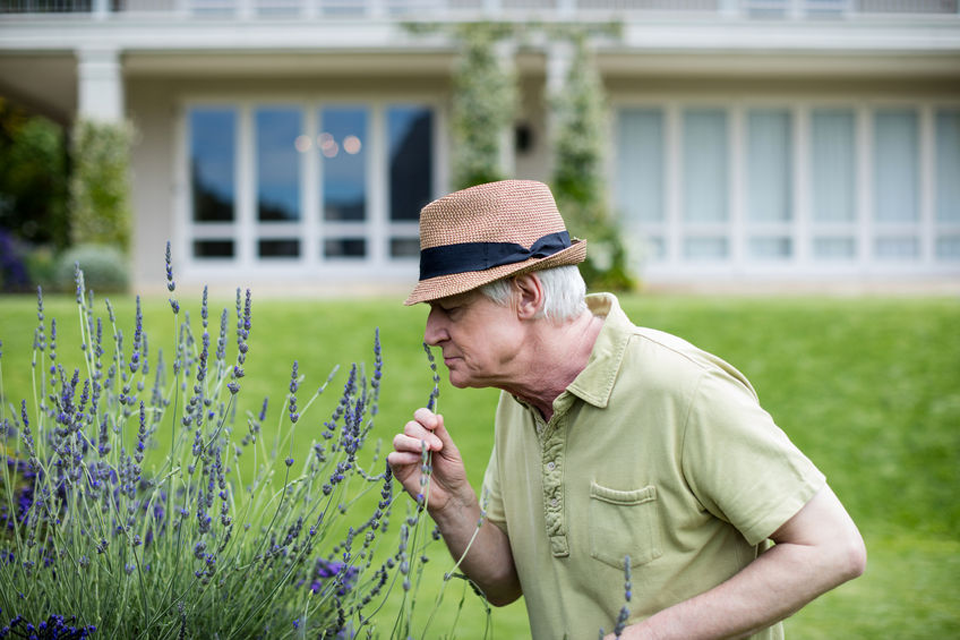
Elderly man in sensory garden

Sensory Garden

Sensory Gardening For The Elderley The Joys Of Sensory Gardening A sensory garden is one that is created to tantalise your sight, smell, touch and taste. It benefits both young and old, and can be especially pleasing for those who have sensory difficulties. Luckily for us, here in Oxfordshire, we are never far from a beautiful garden. For those with failing eyesight, or reduced mobility, rediscovering the strength of the other senses in a garden full of scents, sounds and textures can be invaluable for your well-being. Gardening For The Elderly Prioritising activity and health to maintain our mental and physical strength becomes more important as we age. Although there are plenty of beautiful sites of interest to visit in Oxfordshire, creating and managing a sensory garden for personal or communal use can be the perfect low impact activity requiring minimal travel. You can enjoy gardening alone, or in groups and the variety of plants, seasons and garden accessories will keep even the most reluctant gardener engaged. The Five Senses A sensory garden needs to cater to the five senses of taste, touch, smell, sight and sound; here are some ideas. Taste Planting an array of herbs and edible flowers will stimulate the taste and smell senses. Plant mint and basil next to fruits and vegetables. Edible flowers include evening primrose or hibiscus. Touch Plant flowers that have a variety of textures such as lamb’s ear which feels woolly or yarrow which has stiff flowers but soft foliage. Use smooth pebbles for bordering flower beds, or bark chips on the path. Sound Small water features can be especially pleasing for texture as well as sound, with the gentle trickle of running water from a fountain proving especially soothing. If you like wind-chimes, a small one can provide a subtle splash of light and sound from a dark corner. Sight Planting vividly coloured flowers contrasted with pale colours can be great for sight, as can planting richly coloured fruit plants which will look beautiful once the fruits are ripe. Why not try light-reflecting accessories such as mirrored glass or brightly coloured ornaments as feature pieces, too? Smell Plant lavender, roses or jasmine for a wonderfully perfumed garden. Herbs such as rosemary and dill also add delicious smells to the garden. Local Wildlife Don’t rule out planting flowers and shrubs that attract and support the local Oxfordshire wildlife too. Consider butterfly-friendly buddleias, honeysuckle for dormice or sunny ox-eye daisies for hedgehogs. Their sudden appearance in your sensory garden can delight and provide a pleasant surprise as you sip your morning cup of tea and you won’t be the only one enjoying your sensory garden. Create Yours Today Why not try with a mini-plot of soil in the garden or a few potted plants in the kitchen? Find out if other like-minded gardeners in Oxfordshire who would be interested in creating a community sensory garden for you and your friends, and who knows what you could create! There are many different ways you can create a sensory garden, and with live-in care, you won’t be alone in creating the perfect sensory garden for you. The best way to know for sure whether a sensory garden is for you is just to get started. To find out how are services could assist you with your garden and daily life please follow the below link.

Sensory Garden Read More »

Woman gardening

Benefits of gardening for the elderly

What are the benefits of gardening for the elderly? It’s National Gardening Week and it feels like spring has finally arrived. This makes it the perfect time to get outside and enjoy your garden. Gardening is a rewarding activity for all ages and getting out in nature benefits both the mind and the body. There are many benefits to gardening for the elderly – it’s a great way to get some exercise, but it’s also a pleasure to enjoy the sensory experiences gardening can bring. Keeping, enjoying and being able to tend your own garden is a great benefit of live-in care. You and your carer can get some fresh air, enjoy working in and watching your garden throughout the seasons. One of our carer says “clients can sit outside in their garden and watch the birds and the flowers in bloom and just have a breath of fresh air with a nice cup of tea, a good chat and laughter. This is priceless.” Five benefits of gardening for the elderly? Here are some of the benefits of gardening for the elderly as well as some tips on making gardening easier. We’ve also added some hints on staying safe and well in the garden. Keeping active Gardening has a variety of health benefits. One of the most beneficial aspects of gardening is that it helps us keep active naturally. We don’t even notice we are exercising when we are bending or stretching to plant, prune or water our beautiful plants and flowers. Gardening can improve our balance, too, helping to reduce the risk of falls. Making vitamin D Vitamin D keeps bones, teeth and muscles healthy. Our bodies create vitamin D from direct sunlight on the skin when we are outdoors. You should aim to get 10–30 minutes of midday sunlight, several times per week. Of course, we should take care not to spend too long in the sun and to wear sunscreen if we will be outside for long periods. If you are not sure how much sun exposure is right for you speak to your GP. Supporting our mental health Exercise and being outside in nature are both proven to help our mental health, by reducing stress and easing depression. Gardening is also a rewarding hobby that can take our mind off our worries as well lifting our spirits. It can also help us feel part of the larger world and more connected with nature. A sense of achievement Gardening gives us a great sense of achievement when we see our plants and flowers thriving. Even the smallest gardening task, such as watering a pot of basil or mint on the windowsill can help us feel more satisfied with our day. Growing flowers can also help us do a bit for the environment by encouraging pollinators such as bees and butterflies. Creating a bird feeding station can also be very fulfilling and we can sit and watch the birds enjoy their food and water when our day’s work is done. A sensory feast Gardening is a very sensory experience. When gardening we notice the sights and sounds of the garden from the (hopefully) blue sky above to the tiny creatures who share our patch of earth. We also notice the sound of birdsong and the breeze in the leaves. Gardening helps us experience other senses too, the scent of the flowers, the feel of the soil as we plant out our seedlings and perhaps the taste of fresh strawberries or pungent mint. Gardening for the elderly Of course, some aspects of gardening can become more difficult as we get older. But while double-digging a vegetable patch might be too much for us, there are ways to enjoy gardening no matter our age or ability. The important thing is to adapt your gardening plans according to what you can do. Here are some ways to make gardening easier. Get the right tools The right tools can make most jobs easier and many helpful gadgets are available to help make gardening simpler. You can choose long-handled forks, towels and grabbers to reduce the need for bending or kneeling. Ergonomic tools are also available for those who find it harder to grip. Another handy item is a lightweight yet sturdy gardening stool that enables you to take a break or do some tasks sitting down. Use pots and containers If maintaining a lawn and flower beds is a bit much for you, you can still get plenty of exercise, pleasure and even produce from pots and containers. Large pots have lots of room for roots and hold more nutrients and water so they need feeding and watering less often. Small pots of herbs and flowers and strawberries may be more manageable for some. You could put the smaller pots on shelves or a potting bench to make it easier to water them and help keep them out of the reach of slugs and snails. You can also buy raised beds to help you grow vegetables without the need for digging and bending. Enjoy your garden Of course, gardening is hard work so it’s important to spend some time just sitting and enjoying your garden, perhaps with a cool refreshing drink or a cup of tea. Invest in a comfortable garden chair with a nice padded seat so you are more inclined to stay outside. A parasol is another essential garden item so that you can take regular breaks in the shade. Staying safe in the garden Here are some tips to ensure you stay safe and well in the garden Be sun safe If you are going to be in the garden for any length of time ensure you wear a hat and sunscreen. Alternate time spent in the sun with time in the shade and remember to drink plenty of fluids to stay hydrated Work safely When gardening you should wear sturdy gloves and shoes that protect your feet and have a good grip. Be careful not to leave tools or items such as hoses

Benefits of gardening for the elderly Read More »

Elderly man in a garden

How to create a low maintenance garden for the elderly that attracts wildlife

More and more studies are finding that we benefit from time spent in nature. If you have a garden, then it is easy to bring nature closer by creating a garden that attracts birds, insects and small mammals. Here’s how to create a low maintenance garden that attracts wildlife of all kinds. Wild zone Luckily, gardens that attract wildlife tend to be low maintenance. In fact, not cutting the grass is one of the best things you can do to create a wildlife garden as it will soon be full of wildflowers and provide a place for butterflies to lay their eggs. Many shrubs that attract wildlife such as Butterfly Bush and Holly are easy to grow and need little or no maintenance. Here are a few more ways to make a low maintenance garden that provides a home for wildlife. Bird bistro A simple way to attract birds to the garden is to provide bird feeders. There is a wide range of feeders and types of food available to attract a variety of birds. Different birds have different feeding habits so bear this in mind when choosing feeders. For example, great tits are happy to cling on to a wire feeder, while robins are naturally ground feeders so will appreciate a solid place to perch while they dine. The RSPB has lots of information on how to attract different birds to the garden. Make a buzz One of the easiest ways to attract butterflies to your garden is to plant a Buddleja, commonly known as a Butterfly Bush. Butterflies will swarm to this pretty shrub and you will see many varieties come to feed each day. Standard Buddleja’s can get very large and have masses of purple-blue, pink or white cones of flowers that insects love. If you have a small garden, there are compact varieties available such as Buddleja davidii ‘Buzz Sky Blue’ which can be grown in a large pot. Butterflies and bees also love coneflowers, Shasta Daisies, Lavender, Snapdragons, Sunflowers and Marigolds, which are all easy to grow. Waterworks All your garden visitors will enjoy a long drink when they come to visit, especially in hot dry summers and icy winters. However, you don’t need to create a complicated pond or water feature. A simple low maintenance option is to fill a container, such as a tub, barrel or pot, with water. This will bring birds and small mammals to visit your garden for a drink. If you want to attract frogs and newts, then create a pond with a sloping edge so they can get in and out easily. This doesn’t need to be large and can be created using a preformed pond liner. These are available in a range of sizes and shapes. Frogs and newts will keep down the slugs and snails, too, which is a bonus for keen gardeners. Birds will also appreciate a birdbath or shallow container lined with pebbles, where they can drink and bathe safely. Home sweet home You can create homes for many insects, birds and mammals in your garden, from bird boxes to bug hotels, bat boxes and even hedgehog houses. These are easy to make or can be bought online or from garden centres. A simple pile of logs will create a home for many insects and even possibly a hedgehog! Natural habitats can be created with ivy-covered fences, hedges, shrubs or climbers. Plants such as Honeysuckle, Rowan, Viburnum Opulus and Holly provide both shelters in their dense foliage and food in the form of nectar, berries and seeds. Wholesome herbs A herb garden will attract pollinators and provide fresh, tasty herbs for your cooking. You can create a herb garden in pots on a bench or in a raised bed to make it a low maintenance option that is easily accessible for everyone. A Mumby’s live-in carer can help create your low maintenance garden that attracts wildlife At Mumby’s, we believe that everyone deserves to live a rich and fulfilling life. Our live-in carers can help you keep active and independent and make sure you continue to enjoy the activities you love with their support. A great benefit of live-in care for many elderly people is the fact that they keep their garden and can continue to enjoy tending, sitting and relaxing in it. As people get older they often want a low maintenance garden that allows them to enjoy nature at home. If you love nature and gardening, our carers can help with garden maintenance and tasks such as feeding the birds. You can continue to can enjoy your garden and the benefits that nature brings to your health and wellbeing. For more information on how a Mumby’s carer can help you live a fulfilling life, contact us on 0800 505 3511 for a friendly, no-obligation chat. Give live-in care a try without a long-term commitment Our live-in care 2-week trial allows you to try our outstanding live-in care and make an informed decision for your loved one without any long-term commitment. Book a free care assessment. More blogs on gardening for the elderly: Useful links Live-in Elderly Care How Nature Benefits Mental Health How Live-in Care Works Live-in Care vs Care Home

How to create a low maintenance garden for the elderly that attracts wildlife Read More »

elderly lady with her pet dog

Spending the evening in with an old friend!

A pet is a perfect friend For many of our senior citizens living in Oxfordshire or Berkshire, owning a pet provides enormous amounts of companionship. Pets can also help to reduce stress and lower blood pressure. Owning one can increase social interaction and physical activity for both pet and owner. Maintaining a routine All pets need walking, feeding, watering, grooming and playing with. All of these activities must be carried out by responsible owners. Owning a pet gifts a new sense of purpose and it also helps with routines such as regular times to get up in the morning, buying food and going outside. Just getting up to let a dog out a few times a day or brushing a cat can benefit the cardiovascular system. Not to mention it greatly helps to keep joints limber and flexible. Companionship & Friends Many older people lack physical contact and renewing this through a pet has great benefits. They can be an excellent source of companionship and can act as a support for older people who do not have any family, or close friends nearby. A study published in the Journal of the American Geriatrics Society demonstrated that independently living older people who had pets tended to have better physical health and mental well-being than those that did not. They were more active, coped better with stress, had better overall health, also significantly lower blood pressure. Erectile dysfunction treatment is not cheap so I try to save every dollar if possible. I buy Levitra pills from https://cheaplevitrapill.com and the effect it induces is always perfect. Lasting rock hard erection and several orgasms in one night. Often the elderly have trouble leaving home, so they do not have a chance to see many people. Pets give them a chance to go out and interact. This can help combat depression, one of the most common medical problems facing the elderly. Case Study Celia is my 92 year old Grandmother and has lived alone in Wiltshire since Grandad died about 10 years ago. Grandad was a Wiltshire based farmer and they always had working dogs, after he retired they became pets and a source of companionship. So when Grandad passed away Celia continued to have dogs as it was a source of comfort and routine for her. Even though Celia has a large family who live in Oxfordshire and many friends in Gloucestershire, owning a dog provided her with a companion when there was nobody around. She also had to take her dog out for a walk everyday, so this kept her extremely active. Unfortunately just before Christmas her current dog ‘Bet’ became unwell and had to be put to sleep. Having spoken to her she really does miss Bet’s presence around the house and is looking to get another dog. Not all plain sailing If you know an elderly person that would benefit from having a pet there will be a few things to consider. Make sure they want the responsibility of a pet, as well as the noise and mess that comes with it. Talk to them about whether they feel capable of feeding, watering, grooming, exercising, and cleaning up after an animal. Finally, before you encourage an elderly person to adopt a pet you will need to consider who would take care of the animal if its owner is no longer able to do so. Of course, it would be a huge responsibility for an elderly relative to get their furry new companion when they are a puppy or kitten. If you feel that a new pet would be a great advantage then there are many places where more mature animals, (which may not be as hectic or high maintenance as others) are waiting to be adopted. The Oxfordshire Animal Sanctuary have centres locally. The Blue Cross in Oxfordshire and Berkshire have many animals that are also looking for their companion. Their information can be found at: www.oxfordshireanimalsactuary.org.uk and www.bluecross.org.uk We here at Mumby’s understand the importance of having someone or something for support. A pet can be a great source of companionship should your loved ones feel lonely. If you would like any more information on what we have discussed above please feel free to get in touch.

Spending the evening in with an old friend! Read More »

Elderly falling

Five top tips to avoid falls at home

Every year, 5,000 people die shortly after a hip fracture –that is more than one person every two hours. Hip fractures are the most common cause of injury related death. Nearly one in five of those accidents take place in residential or nursing homes. Mumby’s Live in care services provide the level of support you do not get in care homes. This means there in more 1-2-1 care and therefore less falls. The live-in care hub’s report Better at Home found that those with live-in care had almost ONE THIRD fewer falls than those in residential care and nursing homes. Tops tips: The Live-in Care hub’s top tips for avoiding falls is a combination of good practice and common sense with some basic, low cost precautions: Areas of concern include: Mumby’s will provide personalised advice on preventing falls during our free initial assessment. Taken from the Better At Home report, December 2016. http://www.liveincarehub.co.uk/wp-content/uploads/2016/12/Better-at-Home-Report-2016-1.pdf

Five top tips to avoid falls at home Read More »