





 April marks Parkinson’s Awareness Month which reminds us of the challenges for those affected by Parkinson’s disease. This month, we are raising awareness and sharing the advancements in treatment for Parkinson’s. Treatment for Parkinson’s offers hope and respite to those living with this neurological condition.
From medical interventions to lifestyle modifications and holistic care approaches, the landscape of Parkinson’s treatment continues to evolve.
Treatment for Parkinson’s
Managing Parkinson’s often involves a multifaceted approach. This can include medical interventions, lifestyle modifications, and supportive care. According to resources provided by the NHS, treatment for Parkinson’s aims to alleviate symptoms, improve mobility, and enhance overall well-being.
Medication treatment for Parkinson’s
Medications for Parkinson’s include:
- Levodopa – a medication that helps control movement problems caused by Parkinson’s disease. It works by replacing the dopamine that the brain is missing. This improves the brain’s ability to send messages that control movement.
- Dopamine agonists – are medications that mimic the action of dopamine in the brain. They help improve movement and reduce stiffness by stimulating the parts of the brain that respond to dopamine.
- MAO-B inhibitors – are medications that help preserve the dopamine that is naturally produced in the brain. By blocking the enzyme that breaks down dopamine, these medications help keep dopamine levels higher. This can improve movement and reduce symptoms of Parkinson’s disease.
In a significant stride towards innovation, the NHS has recently rolled out a wearable 24-hour infusion system for advanced Parkinson’s. This groundbreaking technology offers continuous delivery of medication, providing more consistent symptom control and improved quality of life for individuals with advanced Parkinson’s.
Surgical treatment for Parkinson’s
Surgical interventions such as deep brain stimulation (DBS) may be recommended for individuals with advanced Parkinson’s who do not respond adequately to medication.
Lifestyle interventions for Parkinson’s
Dietary considerations
 A balanced and nutritious diet forms the cornerstone of optimal health for individuals with Parkinson’s. While there is no specific “Parkinson’s diet,” adopting dietary practices that support overall wellness can profoundly benefit symptom management and quality of life. Experts recommend a diet rich in fruits, vegetables, whole grains, lean proteins, and healthy fats. These provide essential nutrients and support overall health.
Some dietary considerations for individuals with Parkinson’s include:
- Antioxidant-rich foods – found in fruits and vegetables such as berries, spinach, and kale, have been shown to possess neuroprotective properties and may help reduce oxidative stress associated with Parkinson’s.
- Omega-3 fatty acids – foods rich in omega-3 fatty acids, such as fatty fish (e.g., salmon, mackerel, sardines), flaxseeds, and walnuts, may have anti-inflammatory effects and support brain health.
- Balanced macronutrients – maintaining a balanced intake of carbohydrates, proteins, and fats is essential for energy production, muscle function, and overall health. Aim for a well-rounded diet that includes a variety of nutrient-dense foods to meet your nutritional needs.
- Hydration – staying hydrated is crucial for individuals with Parkinson’s. Dehydration can exacerbate symptoms such as constipation and fatigue. Aim to drink an adequate amount of water throughout the day. Consider consuming hydrating foods such as soups, fruits, and vegetables.
Empowering mobility
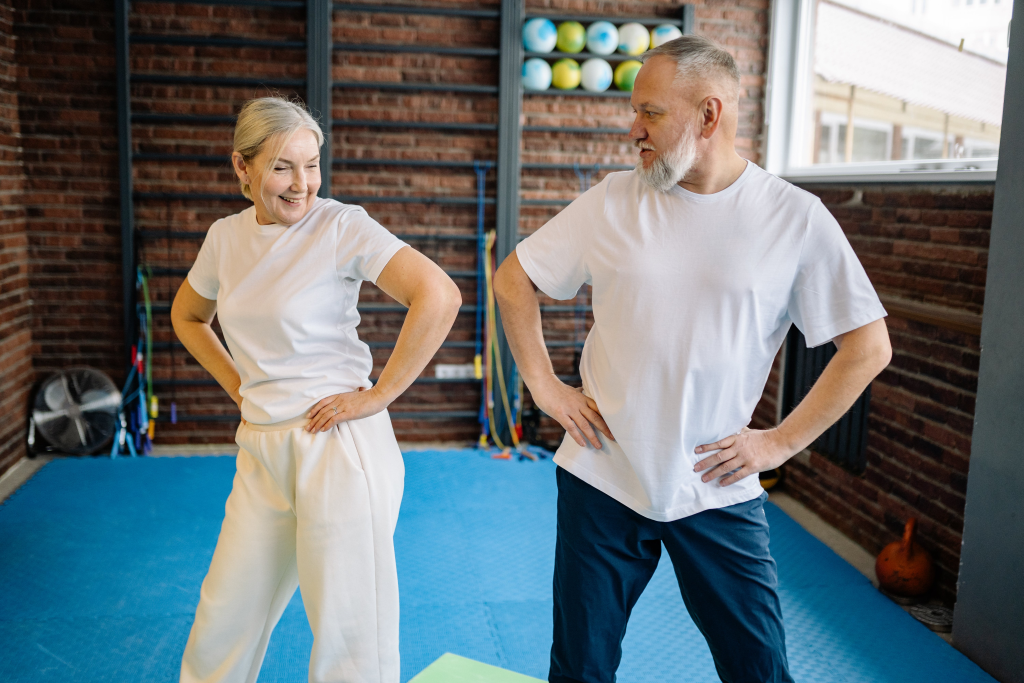 Exercise supports Parkinson’s management, offering a multitude of benefits for physical and emotional health. Regular physical activity has been shown to improve mobility, balance, flexibility, and motor function. It also promotes cognitive function and emotional well-being. Exercise may also have neuroprotective effects, potentially slowing the progression of Parkinson’s and improving quality of life.
Some types of exercise recommended for individuals with Parkinson’s include:
- Aerobic exercise: Walking, cycling, swimming, and dancing can improve cardiovascular fitness, endurance, and overall health. Aim for at least 150 minutes of moderate-intensity aerobic exercise per week, as the World Health Organization recommends.
- Strength training: Resistance exercises using weights, resistance bands, or bodyweight exercises can help build and maintain muscle strength, improve balance, and prevent falls. Focus on exercises that target major muscle groups, such as squats, lunges, and bicep curls.
- Balance and flexibility exercises: Tai chi, yoga, and Pilates are excellent forms of exercise that focus on balance, flexibility, and body awareness. These gentle, low-impact activities can improve posture, reduce stiffness, and enhance overall mobility.
Michael J. Fox and advocacy
In advocating the importance of lifestyle interventions, Michael J. Fox has emerged as a beacon of inspiration and advocacy in the Parkinson’s community. Through his foundation and fundraising efforts, Fox has championed research initiatives aimed at advancing treatment options and finding a cure for Parkinson’s. His unwavering commitment to raising awareness and supporting individuals living with Parkinson’s has catalysed progress and fostered hope within the Parkinson’s community worldwide.
Live-in care for Parkinson’s disease
For individuals with Parkinson’s who require additional assistance with daily activities and personal care, live-in care offers a compassionate and personalised solution.
Providers such as Mumby’s recognise the unique needs of individuals living with Parkinson’s and offer tailored support to enhance the quality of life and independence.
Mumby’s Parkinson’s live-in care provides a range of services designed to address the specific needs and challenges of Parkinson’s. These include medication management, assistance with mobility and activities of daily living, and emotional support.
With a focus on personalised care and compassionate companionship, Mumby’s caregivers strive to empower those with Parkinson’s to live life to the fullest, with dignity and resilience.
Why Choose Mumby’s Live-in Care for Parkinson’s
 At Mumby’s, we set the standard for excellence and innovation in Parkinson’s care delivery. This is demonstrated by our award-winning, outstanding CQC-rated care.
Our carers can help you adapt your home, simplify routines, arrange and get to medical appointments, support you with medication, arrange massage therapy, and maintain regular exercise.
With Mumby’s, you can:
- Remain in the comfort of your own home,
- Have full control over your meal times and preferences,
- Have dedicated one-to-one, 24-hour care,
- Continue your preferred lifestyle and routines,
- Have visits from your friends and family as much as you like.
Mumby’s caregivers prioritise the individual needs and preferences of each client. They ensure that every individual receives personalised, compassionate support to enhance overall well-being and quality of life.
Contact Mumby’s today for a free, informal chat about your needs.
Useful Links
What is Parkinson’s disease and how can I care for someone with the condition?
Nutrition for Parkinson’s – how a healthy diet can help
Advanced Parkinson’s Prognosis and Care
Live-in Care Costs and Funding